
TEROS 10
Simple Soil Water Content Sensor
local base price
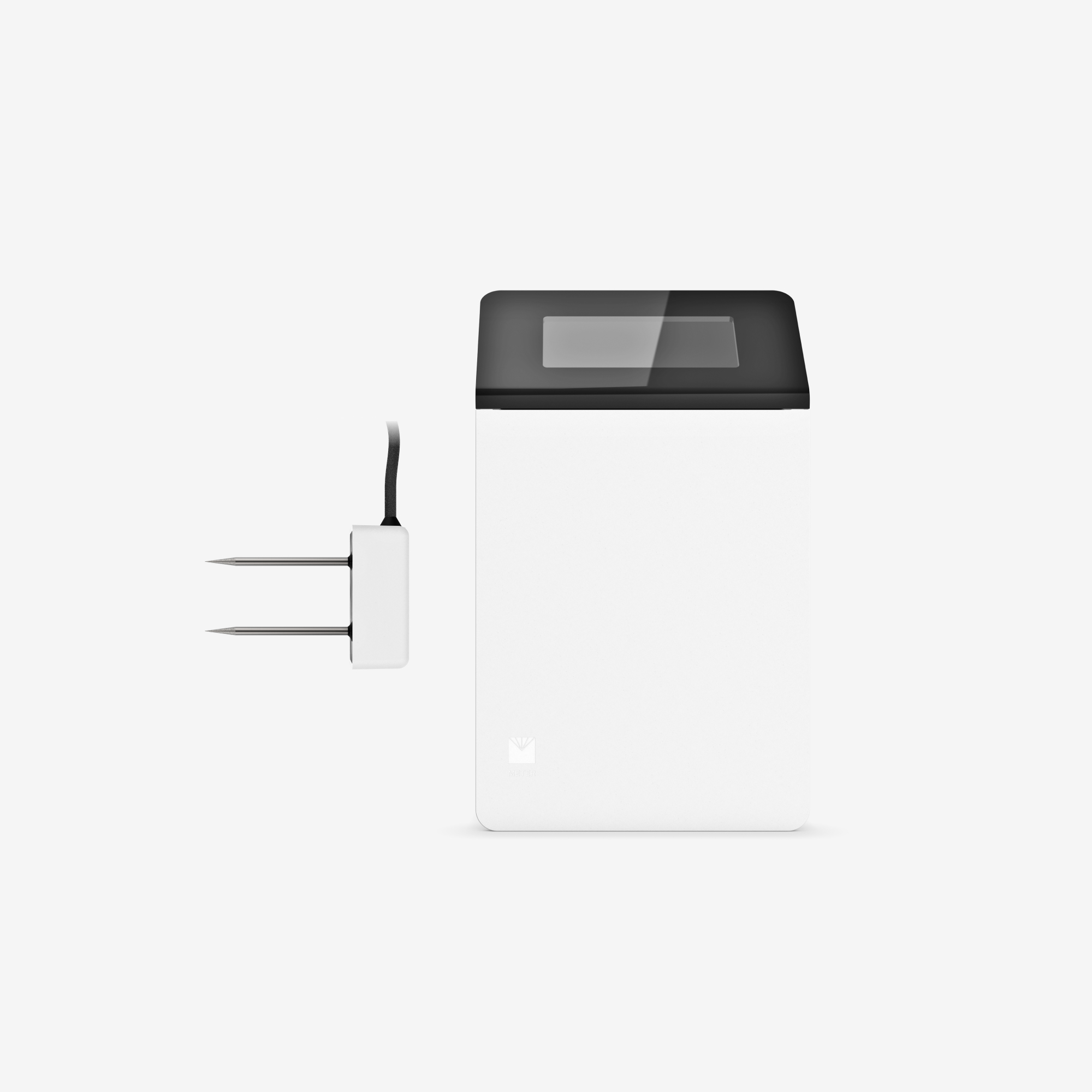
The new, ultra-robust TEROS 10 soil moisture sensor delivers scientific accuracy and reliability at a price that makes large sensor networks economically practical.
- Long-life soil moisture sensor
- Robust epoxy body means it lasts for 10+ years in the field
- Easy integration with third-party systems
-
Overview / Features
-
Characterize variability. Cover more space.
If you’re planning a large soil water content sensor network and want more measurements for less investment, without compromising accuracy or reliability, then plan to use the easy, affordable, and ruggedized TEROS 10 soil moisture sensor.
Everything you need. Nothing you don’t.
The TEROS 10 soil water content sensor is a ruggedized version of our basic, no-frills soil moisture sensor. Its 70-MHz frequency minimizes salinity and textural effects, making it accurate in most soil or soilless media. With a tough, epoxy body, the TEROS 10 is designed to withstand some of the harshest field conditions, which means problem-free measurements over the longevity of your research. We’re so confident about the long life of our TEROS 10, 11, and 12 sensor line, we’ve increased our standard warranty from one to three years.
Long-lasting precision that’s low cost
The TEROS 10 sensor lets you characterize your site with sensors at multiple depths and locations, even on a tight budget. It’s built to last longer in the field under harsh conditions. No more worrying about surprise data gaps due to failed sensors. It’s one of our toughest soil moisture sensors, and its body withstands difficult environments for up to 10 years. Ideal for large sensing networks, it is sensitive to small VWC changes across the entire range of soil and substrate water content and can be installed in anything from dry desert soils to very wet peat. Not only that, the TEROS 10 has very low power consumption and a high resolution.
Simple integration. Simplified data collection.
The analog signal from the TEROS 10 sensor ensures that it can be easily integrated into a wide variety of non-METER systems. METER data loggers simplify your setup: plug the TEROS 10 into a data logger port, configure the port to read TEROS 10 data using the ZENTRA Utility mobile app, and start collecting data. It’s that easy. No wiring. No programming. Combine the TEROS 10 with the new ZL6, where all data are connected and delivered through the cloud. Collect data in near-real time from the comfort of your office, or anywhere in the world.
Faster, better installation
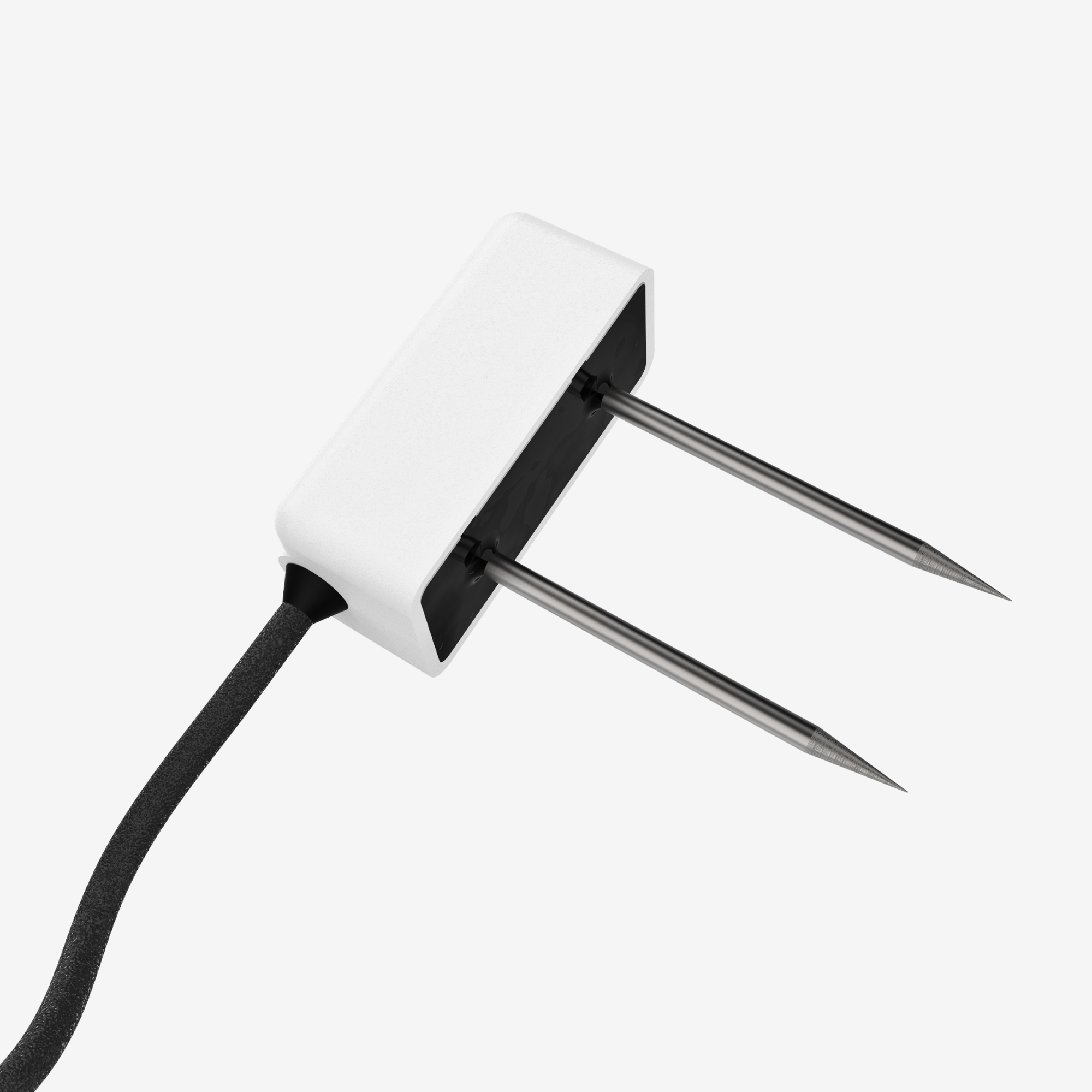
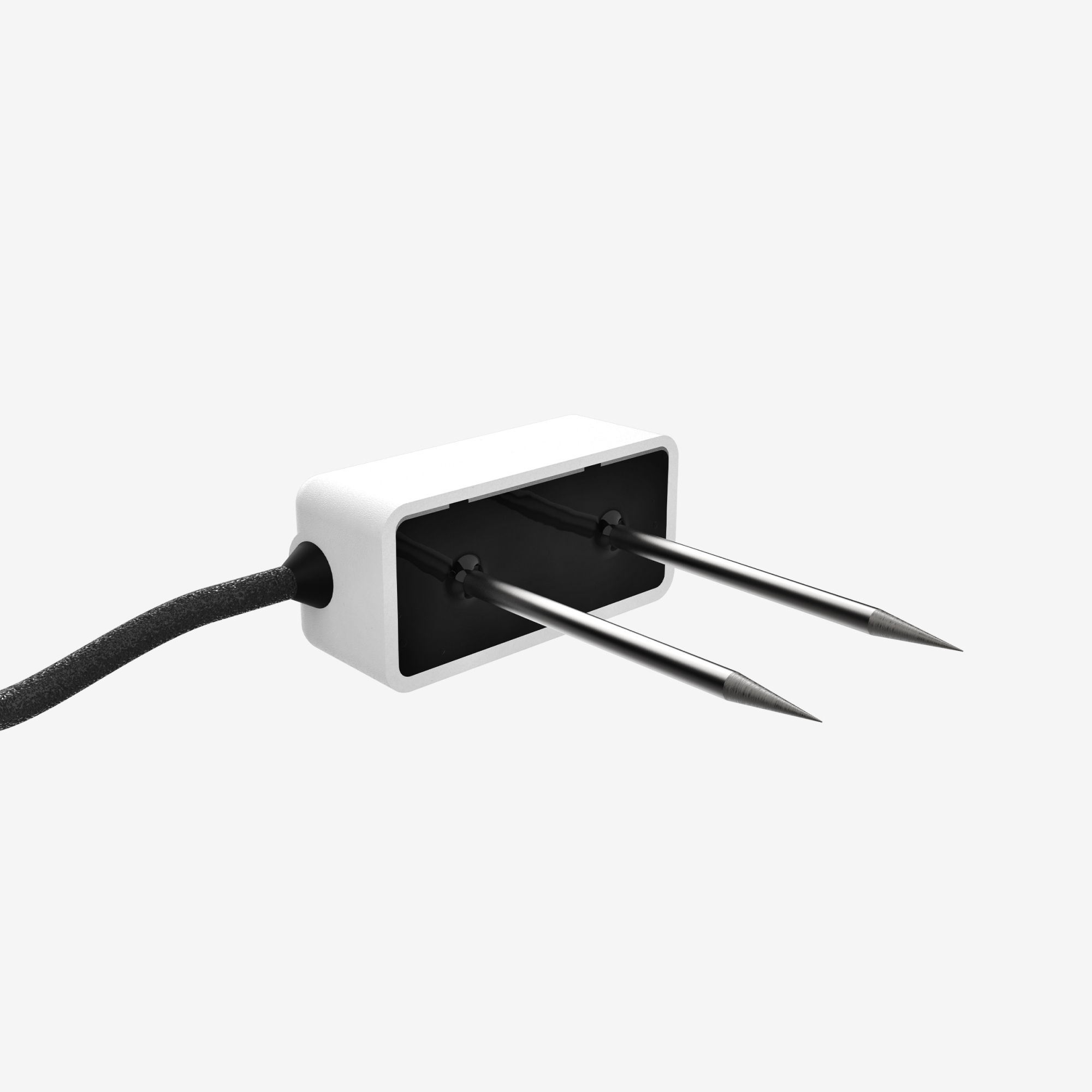
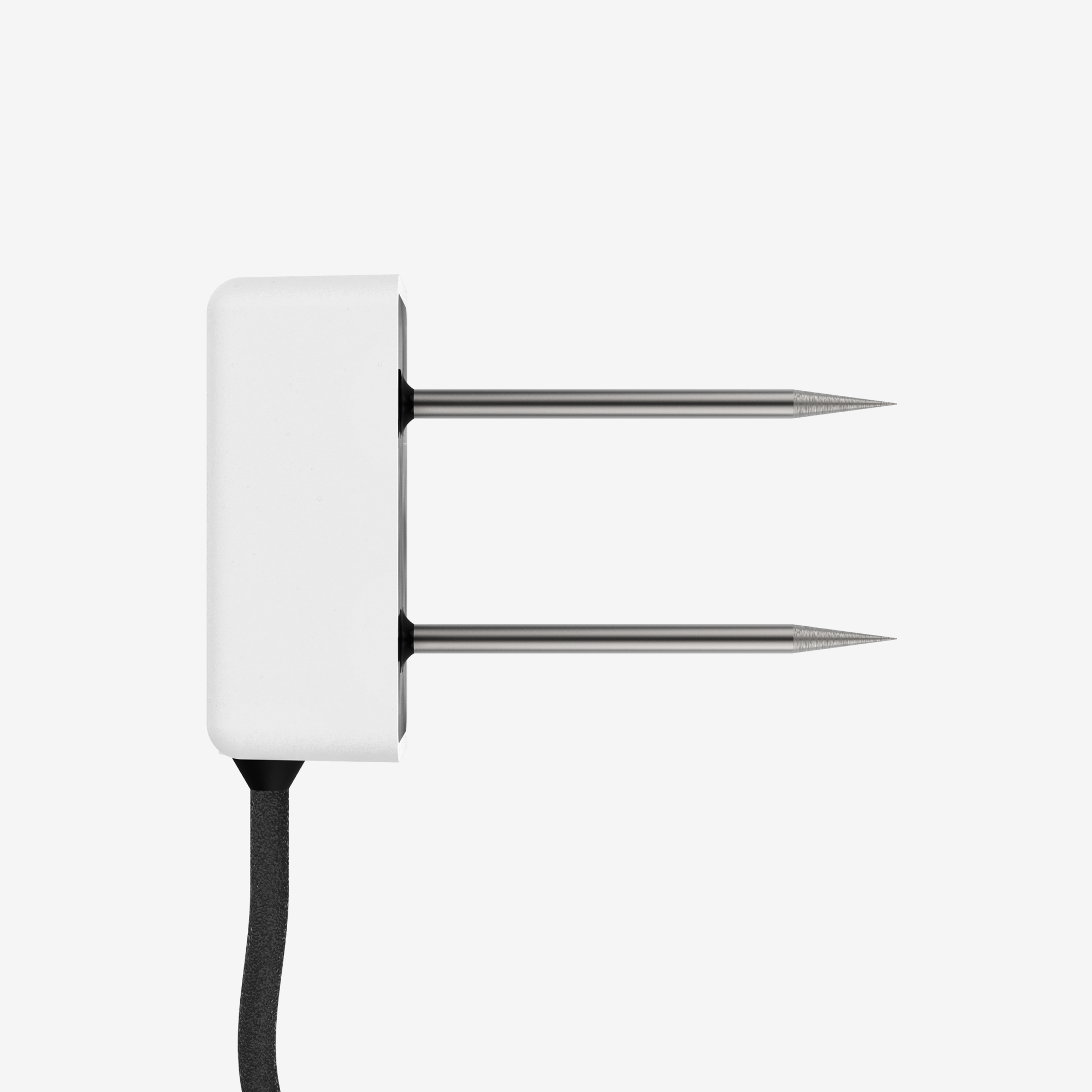
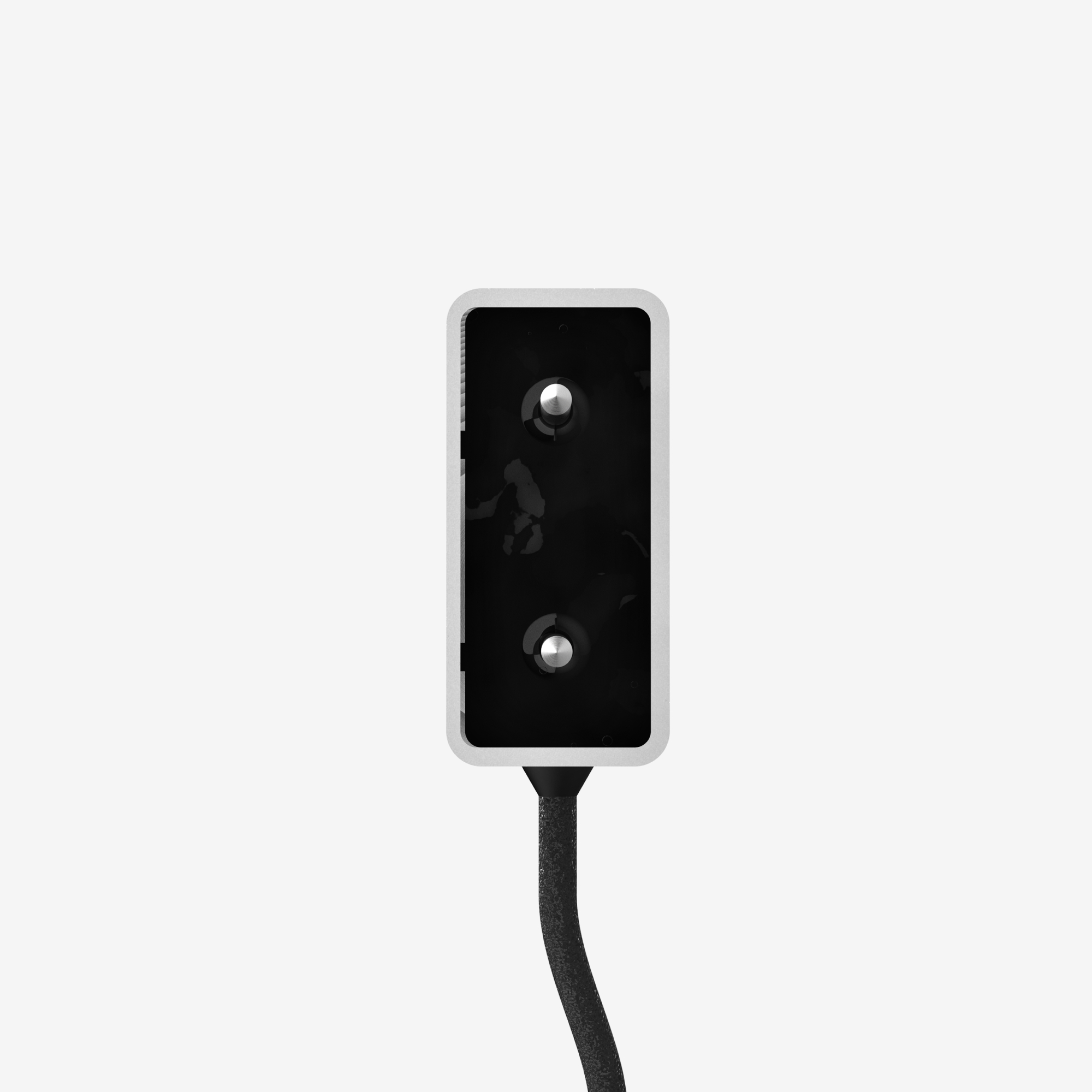
More than just a sensor, the new TEROS 10 eliminates common problems that cause uncertainty in the data—things like air gaps and preferential flow. How? The TEROS 10 is compatible with the TEROS Borehole Installation Tool which mistake-proofs installation. Because of its mechanical advantage, the tool delivers consistent, flawless installation into any soil type (even hard clay) while minimizing site disturbance. Sensors are installed straight in and perpendicular with no side-to-side movement, then gently released to prevent air gaps and preferential flow. This means the TEROS 10 delivers more accuracy with less uncertainty than similar sensors on the market. And, with improved high-quality, sharpened, and securely fastened stainless steel needles, the TEROS 10 glides into any soil.
-
Feature summary
- Low-cost, ruggedized soil moisture sensor
- Ideal for large sensor networks
- Sharpened stainless steel needles are securely fastened and reduce breakage
- Compatible with TEROS Borehole Installation Tool ensuring fast, error-free installation with little site disturbance
- 3-year long-life guarantee
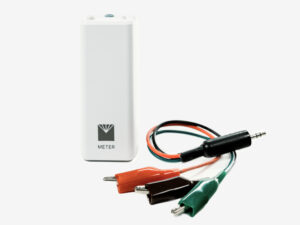
- Check installation or troubleshoot with the ZSC Bluetooth sensor interface
- Measure VWC in a harsh environment
- Robust epoxy body means it lasts for 10+ years in the field
- 430 mL volume of influence
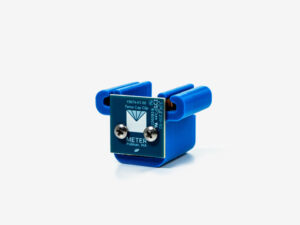
- Repeatability can be checked with an accuracy verification standard
- Plug and play with METER data loggers
- Ferrite core eliminates cable noise
- Easy integration with third-party systems
-
Specifications
-
TECHNICAL SPECIFICATIONS
Volumetric Water Content
RangeMineral Soil Calibration: 0.00–0.64 m3/m3Soilless Media Calibration: 0.0–0.7 m3/m3Apparent Dielectric Permittivity (εa): 1 (air) to 80 (water)NOTE: The VWC range is dependent on the media the sensor is calibrated to. A custom calibration will accommodate the necessary ranges for most substrates.Resolution0.0010 m3/m3AccuracyMineral Soil Calibration: ±0.03 m3/m3 typical in mineral soils that have solution EC <8 dS/mSoilless Media Calibration: ±0.05 m3/m3 typical in media that has a solution EC <8 dS/mMedium Specific Calibration: ±0.01–0.02 m3/m3 in any porous mediumApparent Dielectric Permittivity (εa): 1–40 (soil range) , ±1 εa (unitless) 40–80, 15% of measurementMeasurement Specifications
Dielectric Measurement Frequency70 MHzMeasurement VolumeCommunication Specifications
Output1,000 – 2,500 mVData Logger CompatibilityData acquisition systems capable of switched 3.0–15 VDC excitation and single-ended voltage measurement at greater than or equal to 12-bit resolution.
See compatibility chartPhysical Specifications
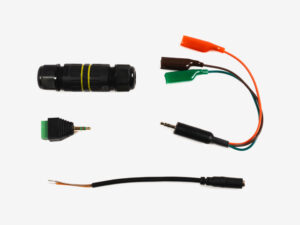
DimensionsLength: 5.1 cm (2.02 in)Width: 2.4 cm (0.95 in)Height: 7.5 cm (2.95 in)Needle Length5.4 cm (2.11 in)Operating Temperature RangeMinimum: -40.00 °CTypical: NAMaximum: 60.00 °CNOTE: Sensors may be used at higher temperatures under certain conditions; Contact Customer Support for assistance.Cable Length5 m (standard)
40 m (maximum custom cable length)NOTE: Contact Customer Support if a nonstandard cable length is needed.Cable Diameter0.165 ± .004 (4.20 ± .10 mm) with min. jacket of .030 (.76 mm)Connector Types3.5-mm stereo plug connector or stripped and tinned wiresStereo Plug Connector Diameter3.5 mmConductor Gauge22 AWG/24 AWG drain wireElectrical and Timing Characteristics
Supply Voltage (VIN to GND)Minimum: 3.0 VDCTypical: NAMaximum: 15.0 VDCMeasurement DurationMinimum: 10 msTypical: NAMaximum: NAOther
ComplianceEM ISO/IEC 17050:2010 (CE Mark)
2014/30/EU 2011/65/EU
EN61326-1:2013 EN55022/CISPR 22EN 55011:2016/A1:2017 (GROUP 1, CLASS A-RCM mark)
GSA
-
Support / FAQ
-
TEROS 10 User ManualManualPDF, 1.6MBTEROS 10 Quick StartQuickstart GuidePDF, 1.3MBVideo: How to install TEROS water content sensors-best practicesInstructionsURL, 1MBTEROS verification clip instruction sheetQuickstart GuidePDF, 1.3MBVideo: How to assemble the borehole installation toolInstructionsURL, 0MBBorehole installation tool assembly instructionsInstructionsPDF, 1.8MBBorehole installation tool rental return instructionsInstructionsPDF, 1.4MBTEROS 10 Campbell Scientific Example ProgramInstructionsURL, 0MB**Soil moisture sensor calibration guideInstructionsPDF, 0.6MBSensor wire splicing guide (quick method)InstructionsPDF, 0.9MBSensor wire splicing guide (complete method)InstructionsPDF, 5MBMETER Splice Kit Repair Instruction VideoInstructionsURL, 0.0 kbVIDEO: ZL6 + ZENTRA Cloud TroubleshootingInstructionsURL
-
TEROS 10 FAQs
- What are TEROS sensor installation best practices?
- See the TEROS sensor installation best practices video here.
- How do I assemble the borehole installation tool?
- See the instructional video here. Written instructions are here.
- How can I perform a SOIL SENSOR CALIBRATION?
- The SOIL SENSOR CALIBRATION written instructions are here. Watch the video for soil-specific calibration here.
- How can I splice a broken wire?
- You can use the quick method (instructions here) or the complete method (instructions here).
- Is there a paper you can refer me to concerning the effects of digging a trench on the soil at a site?
- I don’t have a specific paper to refer to on this topic. The concern with large trenches is the way it affects water movement through the soil near the sensor. Depending on how the trench is repacked you can wind up with preferential flow paths which will result in faster water migration through the soil profile. For more information on this topic, see our article: "5 Ways Site Disturbance Impacts Your Data."
- Where could I find the protocols and good experimental design to publish scientific research articles for watering requirements and watering optimization?
- I would focus on a literature review that takes in papers on water requirements and optimization and carefully study their protocols and match your efforts with their designs, with improvements. Generally speaking, good sensor-to-soil contact and carefully derived models for water uptake along with weather data for water use using crop coefficients and ET are things to consider.
- How can you tell the relationship between satellite images and sensors for intelligent irrigation?
- This is a critical area or research at the moment. There are several institutions currently with projects trying to relate the two. Currently, I am involved in a project where we are using satellite data like Normalized Difference Water Index and ECOSTRESS to correlate with individual soil moisture sites in the field. We will use the trending information from the field data with the infrequent snapshots of the satellites to combine for a complete picture (we hope). Since they are massively different scales, this effort will be challenging.
- How is it possible to remove the sensors from the soil at the end of the season?
- Most water content sensor installations are permanent because removing the sensor is difficult. In the agricultural setting, the sensor and cable are often installed below the working layer. However, there are some rod type profile sensors that extend above the surface and can be removed each year. The accuracy of these sensors isn’t great, but sometimes it is good enough.
- What are good soil moisture sensors for a park?
- The TEROS 10, TEROS 11 and TEROS 12 are ideal for use in a park. They are commonly used to monitor irrigation in turfgrass and other agricultural situations.
- How is the sensor-to-sensor repeatability with TEROS sensors?
- For the TEROS 11 and TEROS 12 is it extremely tight. We normalize each sensor to make sure it reads like every other TEROS 11/12. Our tests show that we maintain repeatability to well within 1% water content. The TEROS 10 doesn’t have a microprocessor to allow the normalization procedure, so we have to depend on really tight manufacturing processes. We can still hold that entire population to within about 2% water content.
- Which sensors are adequate for measuring water in individual potted plants and the whole nursery?
- The dielectric sensors are commonly used in individual pots. You’ll just need to pick a sensor that will fit in the chosen pot size. The TEROS 12 is a really popular choice for potted plants because it measures water content and electrical conductivity, which is an indicator of fertilizer level. The trick with measuring in potted plants is to pick plants that are representative of the larger nursery or irrigation zone because it is generally far too expensive to instrument each pot.
- Is there a reason for TEROS 12 sensors that are placed perpendicular to the soil instead of horizontal?
- The only reason is to avoid having the body of the sensor impede water flow through the soil. That effect is pretty minor, but it can cause a time lag in the soil moisture signal as the water has to redistribute around the sensor.
- What is your water content measurement advice for tree plantation? Are there any limitations? Any patterns?
- There are no problems with measuring water content in that scenario. One consideration is getting a measurement that is representative of the root zone. This is pretty easy if you’re relying on rain or using overhead irrigation. Sensor placement becomes more important if you’re using a drip irrigation system though. Many people place the sensors directly under the emitters if using drip.
- What type of sensors work best in substrate growing?
- Generally, the dielectric soil moisture sensors are used. Often fertilizer levels are important, so growers will use a combination water content and electrical conductivity sensor to measure both water and fertilizer. The TEROS 12 is a really popular choice for substrate growing.
- How reliable are measurements in saturated and highly variable soil conditions, such as peatlands?
- The measurements are fine in such a scenario, with one limitation. Once the peat is saturated at the level of the sensor, more water can be added to increase the ponding height, but the sensor will still only measure the saturated water content at its level until the water recedes. In peat, you’ll likely want a substrate-specific calibration for best accuracy, since the organic material is a bit different from mineral soil. See our calibration instructions for some step-by-step instructions for the substrate-specific calibration if you’re interested.
- If roots grow between the sensor needles over time, how does it influence the measurement? How do we work around it?
- The dielectric measurement will measure all the water in its measurement zone, including the water in nearby roots. So, it is possible to get enough rooting density in the measurement volume to affect the measurement. This might lead to a bias in the measurement, but there is really no work-around. In practice, the effect is pretty small, so water content sensors are used in agricultural/irrigation settings extremely often with no noticeable problems.
- How does air impact sensor data, for instance in a shallow installation of 1-2 cm or in a narrow soil column, when the volume of influence is usually a sphere of 5-10 cm diameter?
- This is difficult with most sensors. The dielectric permittivity of dry air is close to 1, while the permittivity of water is 80. While some amount of air exists in all soil pores, a significant amount of air within a sensor's volume of influence will reduce the accuracy of its readings, which is why we recommend an installation method that provides good soil-to-sensor contact. You can expect to see a 2-3% underestimation of soil volumetric water content if you install a TEROS sensor with the body of the sensor on the soil surface. You can correct for this with a custom calibration if desired.
- How is dielectric measured? In which units?
- That’s a trick question! But only because dielectric is a unitless quantity. It is ratio of charge storage in a medium to the charge storage in free space. It can be measured in many ways, including travel time of a pulse (TDR, TDT), charge time of a capacitor, or resonance frequency. Various soil moisture sensors make use of these different measurement techniques.
- Is it a challenge to keep the water content sensor in place while you backfill with soil?
- That is a good question and one I also had when we were developing the concept of the installation tool. Fortunately, it has not proven to be a problem except in dry, coarse-textured soils. The pins on the TEROS sensors do a pretty good job of anchoring the sensors in place while the soil is repacked behind them. But, in dry sand, it is difficult to even keep the auger hole intact, not to mention keep the sensors in place.
- How does soilless organic media such as biochar or coco coir affect dielectric sensor accuracy? Does the physical shape and size of the pores holding the water being measured affect the measurement since it affects the electrical path between the anode and cathode?
- Fortunately, the shape and size of the pores has little effect on the dielectric measurement. The electromagnetic field will polarize all the water molecules within the volume of measurement regardless of pore geometry. But, with organic materials, the dielectric permittivity of the low-density material is generally lower than that of mineral soil. So, accuracy can suffer, with the dielectric sensor measuring water content biased low. With these unique materials, I always recommend a substrate-specific calibration. We have some detailed instructions on how to create this calibration here. You’ll notice that there is a special procedure for coir since it is pretty difficult to work with.
- Are there any special considerations for very rocky soils or areas where the soil water content is typically very low as in the Mojave desert?
- Low water content is not a problem and can be measured accurately by the dielectric sensors. Rocky soils are difficult for all soil sensors though. Best-practice installation techniques of inserting sensors into undisturbed soils may not be possible in rocky soils. You may have to remove some rocks and install the sensor into re-packed soil with no rocks. This will affect accuracy some, but precision should still be good.
- What is the best sensor to track the excessive moisture content in the soil? What are the moisture ranges for these sensors?
- Good question. Our TEROS 10,11, 12 water content sensors will tell you how much water is present, so they can characterize the degree of saturation, which is an indicator of excess moisture. The TEROS 32 tensiometer will characterize the soil suction, and maybe even more importantly positive pore water pressure, both of which are important for slope stability and soil engineering projects. I’m not a civil engineer, but my understanding is that the combination of degree of saturation from the water content sensors and soil suction from the TEROS 32 is the optimal combination for understanding soil strength. Both sensor types work great in the excess moisture range, but the TEROS 32 will fail in dry soil.
- What are the applications for soil moisture sensors in asphalt pavements?
- Here is a case study about soil moisture sensors in asphalt: https://metergroup.com/meter_knowledgebase/compression-testing-of-soil-moisture-sensors-embedded-in-asphalt/.
- What was your experience developing soil moisture sensors for NASA's JPL Phoenix Rover? Why did the sensor also record thermal conductivity? Were there any interesting findings?
- Don’t get us started! The experience was great overall. The team we worked with at JPL were really good scientists and engineers. The thermal properties measurements were intended to be a ground-truth for remotely-sensed regolith thermal properties data, which are key to understanding the depth of penetration of solar heat. All of the measurement functions on the TECP worked well, and the project is considered highly successful. Maybe the most important finding was the vapor phase migration of water into the regolith as the regolith cooled with Martian winter approaching. The increase in dielectric permittivity that TECP measured was far larger than expected, probably due to water interacting with perchlorate salts in the unfrozen phase. We shot a video with the lead JPL researcher a while back. You can check it out here.
- How do you deal with extremes in salinity - high or low?
- Low salinity is generally not a problem for most water content sensors. Extremely high salinity can be a problem. With TDR, high salinity can attenuate the signal to the point where no water content measurement is possible. With some of the capacitance type sensors, the accuracy can be really poor in high salinity soil. A soil-specific calibration can fix this for the capacitance sensors. The water content measurement of CDX sensors like the SOLYX 14, however, is largely insensitive to high electrical conductivity. Learn more about the SOLYX 14 here.
- Which is better for water content sensors: vertical installation of installation at an angle?
- Either installation is fine. Find more installation tips here.
- If wanting to irrigate from a minimum percentage of soil moisture, which depth should we take into consideration?
- The most meaningful depth is typically the depth with the highest root density. But, multiple depths do bring additional information. Often growers will place two sensors in the root zone and one below the root zone. The third sensor below the root zone helps control leaching fraction.
- Do you think dielectric is a more accurate option than a pressure chamber for almonds?
- The dielectric measurement gives you a nice time-series of soil water content that you can monitor remotely. The pressure chamber will give you the water potential of the almond tree itself. The pressure chamber water potential measurement is a far better indicator of the water stress status of the almond tree. But, the downside is that collecting pressure chamber data is difficult and time consuming. Many growers use the pressure chamber measurement to “calibrate” their soil water content measurements, and figure out what water content starts to cause too much water stress. This makes the time-series water content data really powerful and convenient for quantifying water stress.
- How difficult is calibration of dielectric sensors?
- The process is not difficult, but it does take some care. We have some detailed step-by-step instructions online here. If you don’t have the equipment, time, or desire to do this procedure yourself, we also offer a service to do the calibration for you if you send us a sample of your soil/substrate. You can contact [email protected] for details about the soil-specific calibration service.
-
Resources / Publications
-
Calibration
Resources
Education links
- Performance evaluation of research grade water content sensors across multiple soil types and electrical conductivities
- Soil moisture sensors: How they work. Why some are not research grade.
- The complete guide to irrigation management using soil moisture
- What is soil moisture?
- When to water: Dual measurements solve the mystery
- The researcher’s complete guide to soil moisture
- Soil moisture 101: Need to know basics
- Soil moisture 102: Water content methods—demystified
- Webinar: Soil moisture: Why water content can’t tell you everything you need to know
- Webinar: Water management: 3 tools you might be missing
Support links
- Soil sensor calibration instruction video
- Soil sensor calibration written instructions
- TEROS sensor installation best practices video
- Manuals and software
- Borehole Installation tool assembly instructional video / Written instructions
- Compare measurement volume of METER sensors
- Wire splicing guide: quick method (instructions here) or the complete method (instructions here).
- How to install soil moisture sensors—better, faster, and with higher accuracy
Case studies
- Soil moisture sensors aid crop production in space
- Soil sensors help thousand-year-old levees protect residents of the Secchia River valley
- Unraveling the effects of dams in Costa Rica
- Snapdragons and soil moisture sensors
- Fukushima reborn
- Perfecting turfgrass
- Living on the brink
- Feed the world
- Green roofs—do they work?
- Which factors make rain gardens more effective?
- Why mesonets make weather prediction more accurate
- Irrigation and Climate Impacts to the Water-Energy Balance of the WI Central Sands
- Low impact design: Sensors validate California groundwater resource management
- Compression testing soil moisture sensors in asphalt
- Stem water content changes our understanding of tree water use
- Irrigation curves: a novel irrigation scheduling technique
- Sensors help solve water distribution issues in putting greens
- Screening for drought tolerance
- Soil moisture sensors in a concrete bridge
- Do soil microbes influence plant response to heat waves
- Predicting the stability of rangeland productivity to climate change
- Are biodegradable mulches actually better for the environment?
- Improving drought tolerance in soybean
- Oklahoma Switchgrass: How deeper root systems affect the water cycle
- Understanding the Influence of Coastal Fog on the Water Relations of a California Pine Forest
- Mesh wireless sensor networks: Will their potential every be realized?
- Soil sensors aid forensic science in time of death estimates
- Soil moisture sensors in roadbeds
- Soil moisture and temperature sensors aid landmine detection
- Water holding and temperature patterns of canopy soil in an old growth forest
- Scientists and greenhouse growers collaborate to help the environment
- Climate Change, Genetics, and the Future World
- Degradation of soil applied herbicides under limited irrigation
-
Selected Publications
The GS1 water content sensor was renamed TEROS 10 in 2015. This list of publications is not exhaustive. Find more publications by searching TEROS on scholar.google.com.
2026
Azizi, S. A., Wyatt, B. M., Patrignani, A., Ochsner, T. E., & Cosh, M. (2026). Performance of five common soil moisture sensors using default calibration equations in low-salinity conditions. Vadose Zone Journal, 25, e70105. (Article link).
2020
- Choe, Byung-Hun, Gordon R. Osinski, Catherine D. Neish, and Livio L. Tornabene. “A Modified Semi-Empirical Radar Scattering Model for Weathered Rock Surfaces.” Canadian Journal of Remote Sensing 46, no. 1 (2020): 1-14. (Article link).
- Holdo, Ricardo M., Daphne A. Onderdonk, Annabelle G. Barr, Meshak Mwita, and T. Michael Anderson. “Spatial transitions in tree cover are associated with soil hydrology, but not with grass biomass, fire frequency, or herbivore biomass in Serengeti savannahs.” Journal of Ecology 108, no. 2 (2020): 586-597. (Article link).
- Töchterle, Paul, Fengli Yang, Stephanie Rehschuh, Romy Rehschuh, Nadine K. Ruehr, Heinz Rennenberg, and Michael Dannenmann. “Hydraulic Water Redistribution by Silver Fir (Abies alba Mill.) Occurring under Severe Soil Drought.” Forests 11, no. 2 (2020): 162. (Article link).
- Singh, Jasreman, Derek M. Heeren, Daran R. Rudnick, Wayne E. Woldt, Geng Bai, Yufeng Ge, and Joe D. Luck. “Soil Structure and Texture Effects on the Precision of Soil Water Content Measurements with a Capacitance-Based Electromagnetic Sensor.” Transactions of the ASABE 63, no. 1 (2020): 141-152. (Article link).
2019
- Baker, Kathryn V., Xiaonan Tai, Megan L. Miller, and Daniel M. Johnson. “Six co-occurring conifer species in northern Idaho exhibit a continuum of hydraulic strategies during an extreme drought year.” AoB Plants 11, no. 5 (2019): plz056. (Article link).
- Rehschuh, Stephanie, Martin Fuchs, Javier Tejedor, Anja Schäfler-Schmid, Ruth-Kristina Magh, Tim Burzlaff, Heinz Rennenberg, and Michael Dannenmann. “Admixing Fir to European Beech Forests Improves the Soil Greenhouse Gas Balance.” Forests 10, no. 3 (2019): 213. (Article link).
- Chen, Yong, Gary W. Marek, Thomas H. Marek, Kevin R. Heflin, Dana O. Porter, Jerry E. Moorhead, and David K. Brauer. “Soil water sensor performance and corrections with multiple installation orientations and depths under three agricultural irrigation treatments.” Sensors 19, no. 13 (2019): 2872. (Article link).
- He, Wenmei, Gayoung Yoo, Mohammad Moonis, Youjin Kim, and Xuanlin Chen. “Impact assessment of high soil CO2 on plant growth and soil environment: a greenhouse study.” PeerJ 7 (2019): e6311. (Article link).
2018
- Alcívar, María, Andrés Zurita-Silva, Marco Sandoval, Cristina Muñoz, and Mauricio Schoebitz. “Reclamation of saline–sodic soils with combined amendments: impact on quinoa performance and biological soil quality.” Sustainability 10, no. 9 (2018): 3083. (Article link).
- Bretfeld, Mario, Brent E. Ewers, and Jefferson S. Hall. “Plant water use responses along secondary forest succession during the 2015–2016 El Niño drought in Panama.” New Phytologist 219, no. 3 (2018): 885-899. (Article link).
- Goswami, Manash Protim, Babak Montazer, and Utpal Sarma. “Design and characterization of a fringing field capacitive soil moisture sensor.” IEEE Transactions on Instrumentation and Measurement 68, no. 3 (2018): 913-922.
- Magh, Ruth-Kristina, Fengli Yang, Stephanie Rehschuh, Martin Burger, Michael Dannenmann, Rodica Pena, Tim Burzlaff, Mladen Ivanković, and Heinz Rennenberg. “Nitrogen nutrition of European beech is maintained at sufficient water supply in mixed beech-fir stands.” Forests 9, no. 12 (2018): 733. (Article link).
- Macarena, Filipe Adriano Mutumba1 Erick Zagal, Gerding2 Dalma Castillo-Rosales, and Leandro Paulino1 Mauricio Schoebitz. “Plant growth promoting rhizobacteria for improved water stress tolerance in wheat genotypes.” Journal of Soil Science and Plant Nutrition 18, no. 4 (2018): 1080-1096. (Article link).
- Pain, Rachel E., Ruth G. Shaw, and Seema N. Sheth. “Detrimental effects of rhizobial inoculum early in the life of partridge pea, Chamaecrista fasciculata.” American Journal of Botany 105, no. 4 (2018): 796-802. (Article link).
2017
- Balbontín, Claudio, Isidro Campos, Magali Odi-Lara, Antonio Ibacache, and Alfonso Calera. “Irrigation Performance Assessment in Table Grape Using the Reflectance-Based Crop Coefficient.” Remote Sensing 9, no. 12 (2017): 1276. (Article link).
- Huang, Jingyi, Alex B. McBratney, Budiman Minasny, and John Triantafilis. “3D soil water nowcasting using electromagnetic conductivity imaging and the ensemble Kalman filter.” Journal of Hydrology 549 (2017): 62-78. (Article link).
- Huang, Jingyi, Alex B. McBratney, Budiman Minasny, and John Triantafilis. “Monitoring and modelling soil water dynamics using electromagnetic conductivity imaging and the ensemble Kalman filter.” Geoderma 285 (2017): 76-93. (Article link).
- Wang, H., J. A. Sánchez-Molina, M. Li, M. Berenguel, X. T. Yang, and J. F. Bienvenido. “Leaf area index estimation for a greenhouse transpiration model using external climate conditions based on genetics algorithms, back-propagation neural networks and nonlinear autoregressive exogenous models.” Agricultural Water Management 183 (2017): 107-115. (Article link).
2016
- Lea-Cox, J. D., J. Williams, and M. A. Mellano. “Optimising a sensor-based irrigation protocol for a large-scale cut-flower operation in southern California.” In International Symposium on Sensing Plant Water Status-Methods and Applications in Horticultural Science 1197, pp. 219-225. 2016. (Article link).
- Iezzoni, H. M., and J. S. McCartney. “Calibration of capacitance sensors for compacted silt in non-isothermal applications.” Geotechnical Testing Journal 39, no. 2 (2016): 169-180. (Article link).
- Santana, Otacilio Antunes, José Marcelo Imaña Encinas, and Flávio Luiz de Souza Silveira. “Fire passage on geomorphic fractures in Cerrado: effect on vegetation.” Brazilian Journal of Forest Research/Pesquisa Florestal Brasileira 36, no. 88 (2016). (Article link).
2014
- Genc, Derya, Jeramy Ashlock, Bora Cetin, Kristen Cetin, Masrur Mahedi, Robert Horton, and Halil Ceylan. “Analysis of In Situ Soil Thermal and Hydraulic Data from a Subgrade Sensor Network under a Granular Roadway.” Journal of Cold Regions Engineering (2014). (Article link).
-
Accessories
METER Water Content Sensor Comparison
| row_position | |||||||
|---|---|---|---|---|---|---|---|
| 0 | Feature | 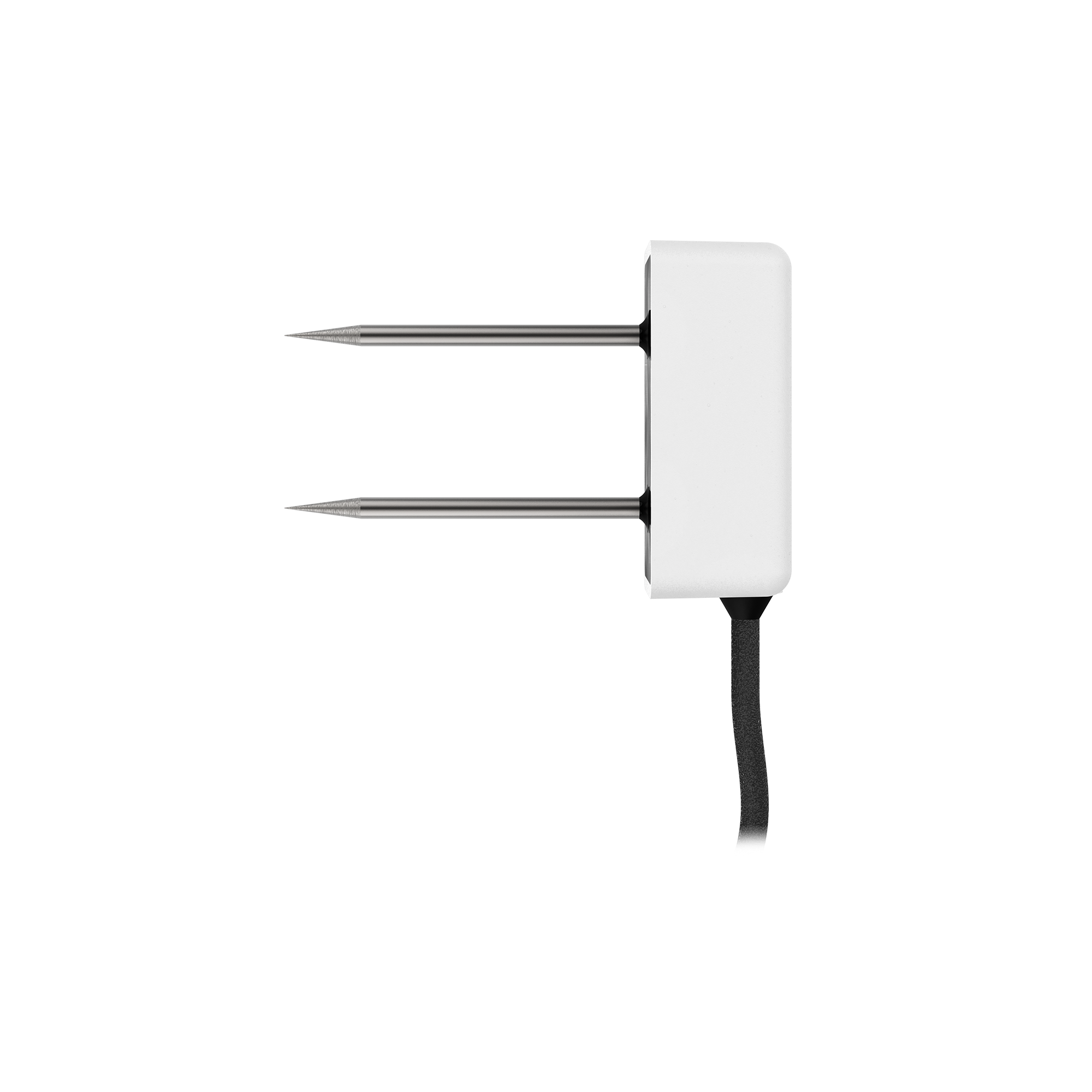
TEROS 10
|
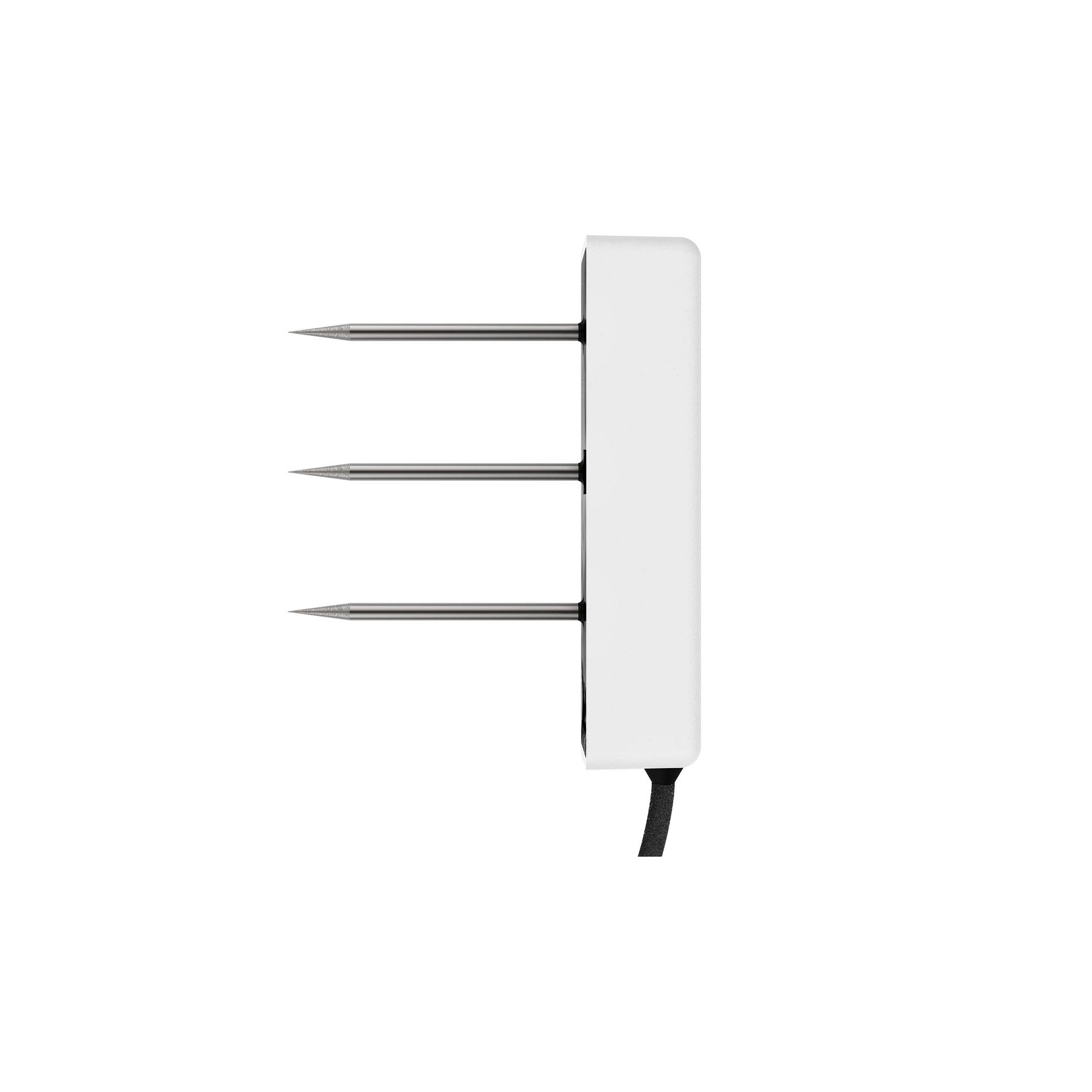
TEROS 11
|
TEROS 12
|
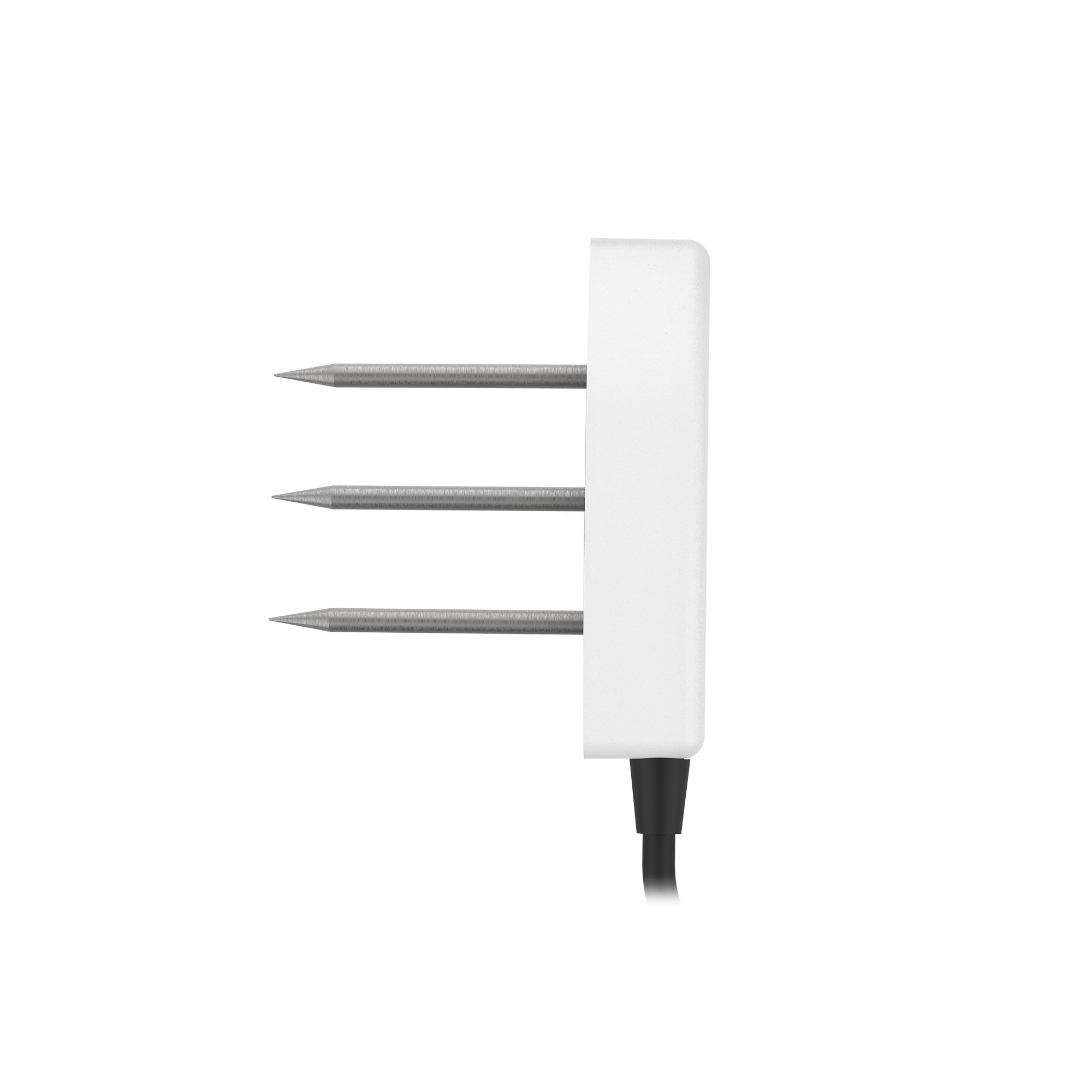
SOLYX 14
|
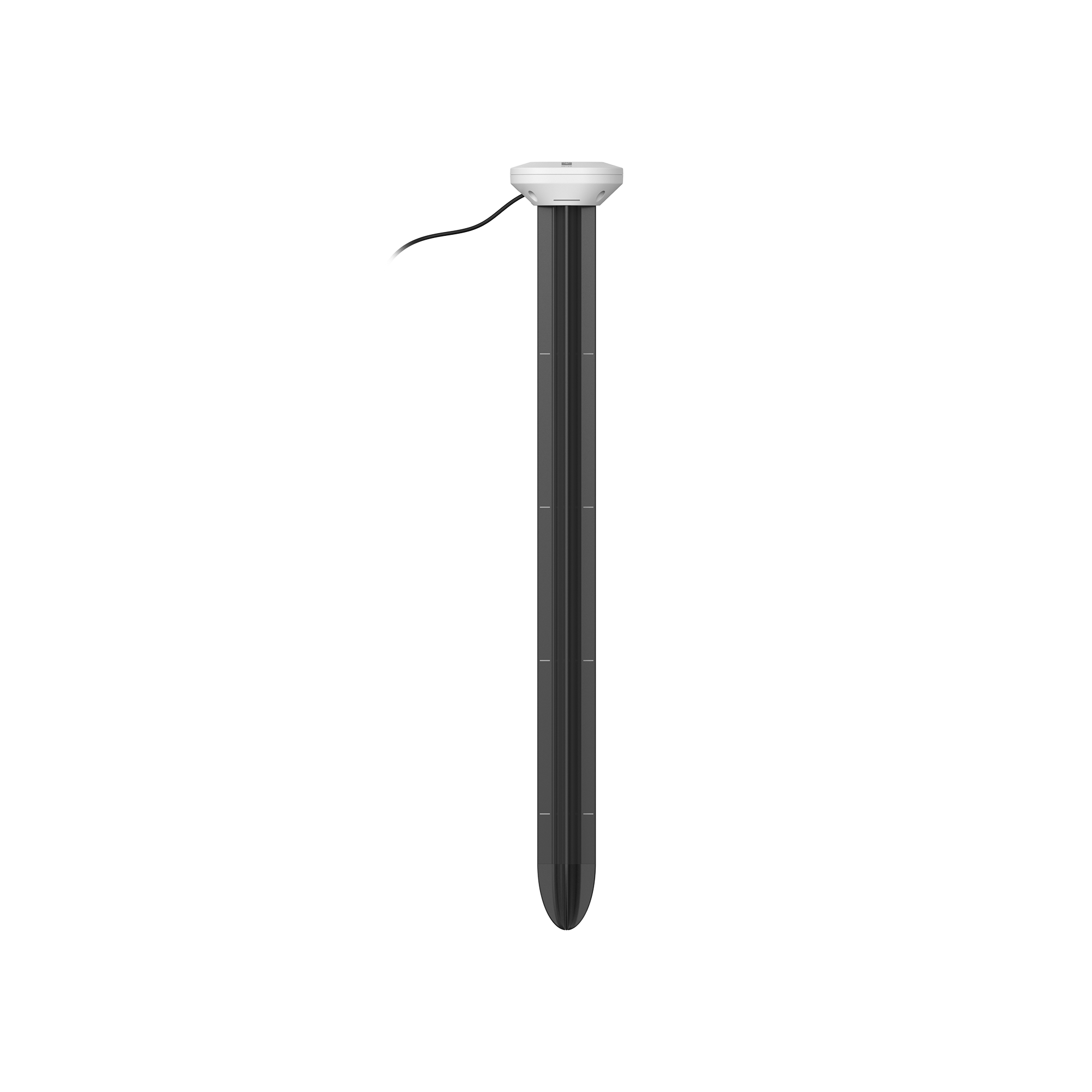
TEROS 54
|
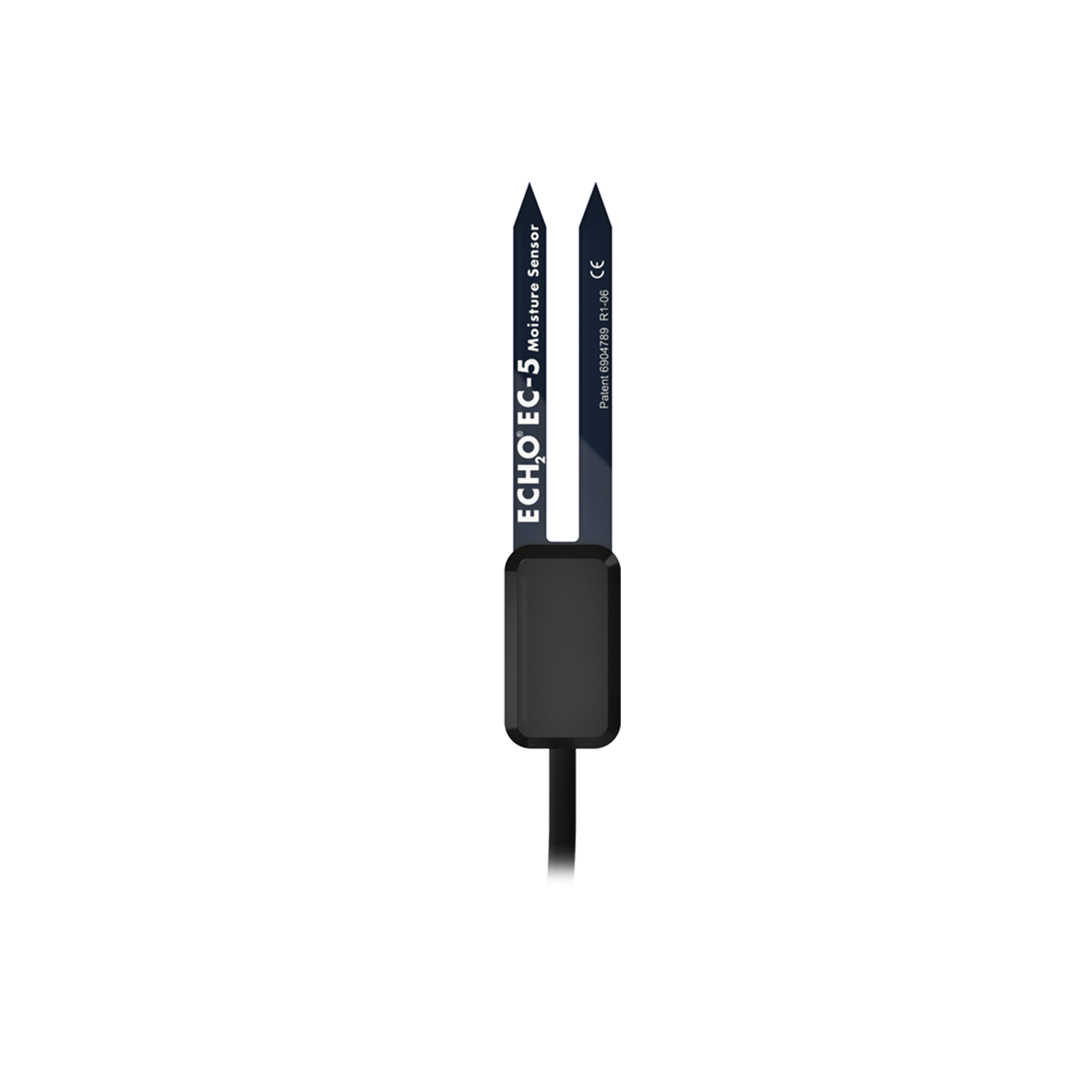
ECH2O EC-5
|
| 1 | Measures volumetric water content | X | X | X | X | X | X |
| 2 | Measures temperature | X | X | X | X | ||
| 3 | Measures bulk EC | X | X | ||||
| 4 | Models pore water EC | X | X | ||||
| 5 | Measures dielectric permittivity | X | |||||
| 6 | Depths measured simultaneously | 1 | 1 | 1 | 1 | 4 | 1 |
| 7 | Individually normalized | X | X | X | X | ||
| 8 | Can install manually | X | X | X | X | X | |
| 9 | Installation tool available | Borehole Installation Tool | Borehole Installation Tool | Borehole Installation Tool | Borehole Installation Tool | TEROS 54 Install Tool | |
| 10 | Installation method | Borehole or trench | Borehole or trench | Borehole or trench | Borehole or trench | Borehole | Borehole or trench |
| 11 | Quickest install/removal | X | |||||
| 12 | Maintenance-free | X | X | X | X | X | X |
| 13 | Compatible with verification clip | X | X | X | On-board SCT circuit verification | ||
| 14 | Volumetric water content accuracy (generic calibration) | ±0.03 m3/m3* | ±0.03 m3/m3* | ±0.03 m3/m3* | ±0.03 m3/m3* | ±0.05 m3/m3* | ±0.03 m3/m3* |
| 15 | Volumetric water content accuracy (medium-specific calibration) | ±0.01–0.02 m3/m3** | ±0.01–0.02 m3/m3** | ±0.01–0.02 m3/m3** | ±0.01 m3/m3** | ±0.02–0.03 m3/m3** | ±0.02 m3/m3** |
| 16 | Analog or digital | Analog | Digital | Digital | Digital | Digital | Analog |
| 17 | Technology type | Capacitance | Capacitance | Capacitance | CDX | Capacitance | Capacitance |
| 18 | Maximum measurement volume | 430 mL | 1010 mL | 1010 mL | 800 mL | 300 cm3 per segment | 240 mL |
| 19 | Connects to ZENTRA Cloud | X | X | X | X | X | X |




Request a quote
Fill out the form below to help us pair you with the right expert. We’ll prepare the information you request, then contact you as soon as possible.